BlueActionBANOS: Turning Ideas into Action – Stories from Community Projects (Part 2)
Webinar, 18 February 2026 - 14:00 CET

In this webinar, we will continue to showcase community‑driven initiatives that spark positive change across the Baltic and North Sea basins.
While Part 1 primarily featured examples from the blue economy sectors, this session (Part 2) will highlight the diversity of actions that can be funded through BlueActionBANOS by presenting a set of projects with an emphasis on environmental stewardship.
What local challenges have communities successfully addressed? Which types of activities have proven impactful, scalable, and are deemed well‑suited to the goals of Mission Ocean?
We listen to practitioners from ongoing or concluded initiatives who will share their experiences, from early engagement to the practicalities of implementation. Hopefully, anyone considering their own community project will come away inspired to develop their full BlueActionBANOS proposal!
Preliminary Agenda:
- 14.00: Welcome and introduction to BlueActionBANOS (BAB).
- 14.10: Frequently Asked Questions relating to BAB funding.
- 14.20: Inspirational stories from exemplary community projects. Speakers and projects TBA.
- 15.15: Q&A.
- 15.25: Next steps and closing.
Note: this is part two of two webinars presenting stories from community projects as inspiration for prospective BAB applicants. Registration required. The recording of the first edition of this webinar is available at this link.
Watch the recording and download the slides from the webinar
📅 18 February 2026
🕧 14:00 - 15:30 CET
📍 Online
🏷️ Free
Speakers
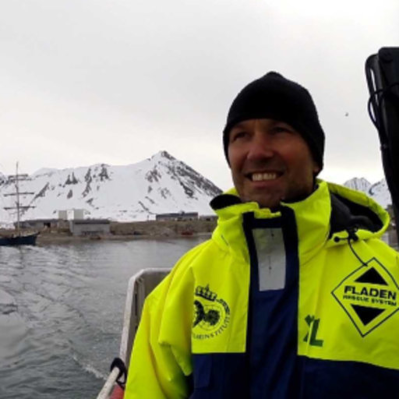
Jānis Ulme
Chair of the Board of the Foundation for Environmental Education Latvia (FEE Latvia)
Jānis has been advocating for the environment since 1998 and currently chairs FEE Latvia. He will present on the citizen science campaign ‘My Sea’ (‘Mana jūra’), which he founded in 2012 and has since evolved into a nation-wide network for monitoring and collecting marine litter, covering more than 40 sites and 500 kilometres of Latvian coastline. Working closely with citizens, municipalities and policymakers, ‘My Sea’ continues to drive community-led action toward a cleaner Baltic Sea. Follow their activities on Facebook!
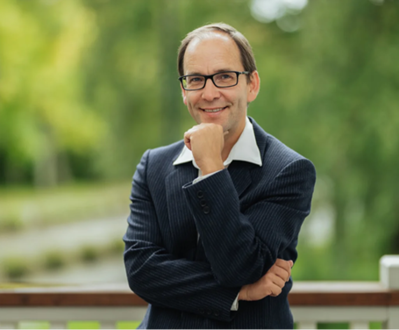
Lancelot Blondeel
Researcher at the Flanders Research Institute for Agriculture, Fisheries and Food (ILVO)
Lancelot has worked on multiple initiatives at ILVO for the advancement of sustainable fisheries, from developing integrated onboard data systems used by both fisheries and researchers, to strengthening local demand and supply in seafood chains together with industry and policymakers. He will present on the OVIS-funded transition agenda ‘Fisheries Sustainability: Strategy’ (‘Visserij Verduurzaamt: Strategie’). Through a feasibility study and benchmark comparison, this project develops a strategy toward long‑term market access for the Belgian sustainability label ‘Visserij Verduurzaamt’.
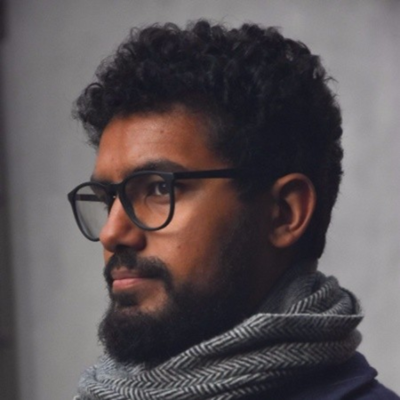
Jenny Herbertsson
Environmental Strategist and Water Coordinator at Katrineholm Municipality
Jenny coordinates several water management initiatives for Katrineholm Municipality, including the Baltic Sea City Accelerator Club and local actions within the LIFE Integrated Project ‘Rich Waters’. Operating in the Northern Baltic Sea River Basin, ‘Rich Waters’ aims to tackle the manifold environmental issues that affect the region’s inland water bodies. Through municipal water planning and targeted action, a broad community of authorities, municipalities, companies, researchers and conservation groups pushes back on eutrophication, internal nutrient loading and pollution. In the process, they have devised solutions that are now ready to be deployed in lakes and watercourses elsewhere, for the benefit of our common waters.
Learn more about ‘LIFE IP Rich Waters’ here
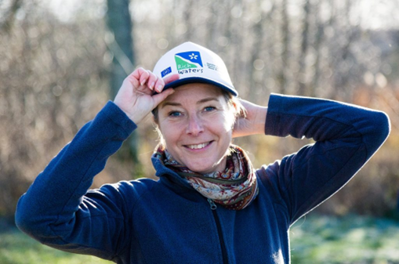
Peter Thor
Senior Researcher at the Swedish University of Agricultural Sciences (SLU)
As a marine ecologist and biological oceanographer, Peter’s research focuses on the physiology of energy transfer in planktonic food webs. Peter has a special interest in ecosystem-based marine management and seeks to apply these principles to the Swedish West Coast, under the project ‘8+fjords’ (‘8+fjordar’). The project started with a participatory planning phase, followed by implementation of ecosystem restoration measures in pilot areas. Peter’s role in this endeavor is to transfer knowledge to local municipalities, offer scientific support for environmental mitigation planning, and guide community-driven management of sustainable resources.
Learn more about ‘8+fjordar’ here.